Showing posts with label online trading. Show all posts
Showing posts with label online trading. Show all posts
Monday, 20 January 2014
The Various Options to Invest in Equity Shares

The scenario
however seem to be changing with each passing time, and the completely open
knowledge and investment education available hands on. The apprehensions are
shedding off and the avenues of investments are pondered upon.
Let us try
to simplify the fuss over equity shares and how to deal with. There are two modes
you can invest in equity shares; one is with the help of a broker another being
online commodity trading. Equity
shares commonly called as the ordinary share also happens to be a kind of
representation of a minute ownership. Therefore the shareholder undertakes the
maximum entrepreneurial risk associated with a business venture
There are
various types of equity shares such as follows:
- Rights Issue/ Right shares, issuing of fresh securities to existing shareholders at a ratio to those already held.
- Bonus shares are the shares issued by the companies to the already existing shareholders with no extra cost by bringing to use the reserves accumulated from the profits earned in the previous years of investment.
- Preferred Stock/ Preference shares are the kind of shares where the owners are entitled to a fixed dividend or the dividend calculated at a fixed rate to be paid in respect of equity share. They also share a preference over equity shareholders in payment of surplus. But in the case of liquidation, the company creditors, bondholders/ debenture holders are given the preference
- Cumulative
Preference Shares: A sub category in the preference type of shares on which if remains are unpaid dividends get accumulated. Before paying the dividend on equity shares the preference dividend have to be paid.

- Cumulative Convertible Preference Shares: Another sub category in the preference type where the dividend payable on the same accumulates if not paid. Over a period of specified date these shares will be converted into equity capital of the company
- Government Security (G-secs): These are issued by the Reserve Bank of India on behalf of Government of India, more of a sovereign coupon bearing instruments, in the position of the Central Governments market borrowing programs. These are to be paid on half-yearly basis specific dates as they are more of fixed coupons. These securities come in a varied range of maturity dates, from short dated to long dated.
- Debentures: These are bonds that a company issues usually which are payable half yearly on specific dates bearing a fixed rate of interest. The principle amount on particular date on redemption of the debentures is repayable.

Tuesday, 7 January 2014
3 Tips to Survive the Indian Stock Market

India is a vast country, with
numerous industries emerging in various sectors. Blessed with ample resources
and huge workforce, the scope for the proliferation of industries is huge here.
If there is one noticeable thing that coincides, with this huge potential for
industrial growth; it is the lucrative opportunity of investing in the stock
market.
India is blessed with diversity in
industries and recent years have showed the growth of several sectors. So, any
investor will surely look forward earning huge profits in the Indian Stock
Market. If you are among the high risk-taking investors, who are
looking forward to gain some substantial amount of returns, then you should
definitely brush up on the basics, help you in making smart, but careful
choices.

Plan your exit
strategy
“Anything that goes up is
definitely ought to come down.” Follow this saying completely, and always be
careful while determining the ceiling for a particular stock. Based on the
estimated ceiling, carefully draft your limit orders. Remember, volume plays a
key role along with stock price, while determining profits.
Diversify your
investments
“Whenever a sector collapses, all
the industries within it collapse.” Follow this popular saying while choosing
your stocks. By choosing companies from different sectors, you will get a
better market exposure and you can implement several trading strategies, for
hedging the risk associated with your investments. Always remember, you don’t
have to be the person who earns highest amount of profit, from a particular
sector; you have to be the person who earns maximum amount of overall profit.
Stay updated and
follow the latest market trends
Indian
Stock market is not ruled by principles of general trade; it
is ruled by the speculations of people, who are emotional about their
investments. While playing with stocks, always be wary about the changing
market trends and latest news. Any significant news about a company will drive
the market bearish or bullish, and your investments, will get affected, accordingly.
So, keep a hawk eye on such news, and implement your trading strategies
accordingly.
Monday, 30 December 2013
Basic fundamentals of Share Market trading

If you are a stock market trader or plan
on investing in shares, there are certain basic principles that need to follow
to become successful. By educating yourself regarding each one of them, you are
able to achieve success for sure.
Virtual
stock trading-
Before investing into actual markets, it
is advisable for you to spend some time on virtual stock market trading or on
stock market trading games. With the
help of this you can familiar yourself withal the terms and working of the
market.
Small
Investments-
Once you are ready for stock market
trading, make sure you don’t invest large sum of money. Rather make a small
investment and then increase the amount slowly according to your progress.
Trading
Plan-
In order to become a successful trader
you must have a trading plan or at
least design one. You will have to do some homework before trading. This
includes study of various charts and diagrams.
Market
Trends-
Time and again you should be keeping
check on the on-going trends in market before making any hard decision
regarding trading or investing. See to it that you understand the strong and
weak sectors out there.
Research-
Any decision you make regarding buying
or selling of stocks should be dependent on your financial goals. If you seek
for a long-term return or short-term gains, choose your stocks accordingly.
Avoid
over trading-
In order to become a successful trader in the live share market world it is crucial that you avoid over trading.
It is always beneficial that you gain less rather than lose more. Keep a positive attitude-
As a trader it should be your prime objective to aim for profits. However, if a plan doesn’t seem to work for you, you must reduce or close positions and watch what’s happening. If a trade seems to fall on a day, there is no need to become mood out.
No
Impulsive Trading-
Impulsive trading is best avoided. It
might result in the loss of large amount of your investments. And if you
believe that you have made a bad trade, you must exit from the trade or keep a
strict stop loss so that losses are minimal.
Friday, 27 December 2013
Online Trading Sites Making Trade Easier Than Ever

Ever since its inception, the stock
market has been an attractive market for investors. However, with the advent of
paperless trading, share trading has gone to the next level. Especially for
regular investors for whom it’s a burden to maintain reams of stock
certificates, opening up an online account has become a necessity. In today’s
times, having a depository in this arena has become solved the biggest barrier
of investing in equities. No wonder, more and more investors are moving into
this form of trading.
 A depository is something similar to a
bank account. Unlike cash, this one holds shares that belong to the investor in
an electronic or dematerialised form. The shares that are bought or sold are
reflected in the demat account of the online trading site chosen. This way, any shares that an investor holds in paper
form can be dematerialised and maintained by way of electronic credit.
The account at regular intervals will
also provide with an account statement showing the balance of shares in the account
and the transactions carried out during that period. They also offer many other
services such as electronic settlement of trades in stock exchanges and much
more.
 When it comes to opening up an online
trading account, it can be done with any bank or with brokers and financial
institutions. In most cases, banks will offer attractive rates for an account
to be opened if you already have a savings account opened with them. But, if
you choose to go for online stock trading, it would be recommended that you
open a DP account and a trading account
with the same broker or financial institution.
It’s important to know that DPs charge
annual maintenance fees, transaction charges, and other miscellaneous charges
for dematerialisation. Make sure you look through them carefully so that you
are not in a state of shock later.
By having a demat account, you always
have an opportunity to carry out trade in a much quicker, smoother and safer
way. This way you can keep a check and monitor your transactions from time to
time.
Understanding the NAV basics before investing in Mutual Funds

It might be possible that by now, more
than a few people might have spoken to you about the importance of investing
money. With the cost of basic necessities rising on a daily basis, it has
become all the more essential to plan for the future. In such situations saving
is not enough. It demands us to take necessary steps.
So once you have taken the decision of
investing in any of the avenues out there, you will find that there are many to
choose from. As you would be putting your hard earned money on the line, it
becomes essential to understand all the details of a scheme before you start
with your journey.
In order to truly understand the market,
it is crucial that you educate yourself regarding some of the basic terms that
might be relevant with your investments. When it comes to mutual funds, this is
when the funds of an investor are grouped together and invested into products
like stocks that might not be affordable on an individual level.
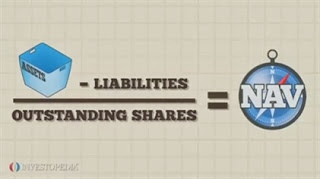 |
| Net Asset Value is the total remaining asset after calculating your liabilities and outstanding shares. |
One of the most important terms you
should get familiar with is the NAV
(Net Asset Value) of a mutual fund. It determines the actual price of a unit of
the fund. It is based on this value that you make an investment decision. When
a fund first enters the market, it has an NFO (New Fund Offer). Later according
to the investments and the fluctuation of the market, the value of a fund rises
or falls based on different factors.
The Net Asset Value in India becomes a
useful piece of information for you because it qualifies as the actual value of
a fund by subtracting the liabilities divided by the number of outstanding
shares. This in turn comes with an actual value per one share the fund. Here,
the liabilities are defined by the amount of debt that has been agreed to be
settled at a certain period of time.
This was one of the few terms you should be familiar with while investing in mutual funds. Once you are clear about it, you can do a little bit of research around the market and browse through the options and make the right choice for a fund.
Discussions and Tweets on NAV :


Friday, 8 November 2013
Online Trading Account: a Quick Method of Investment

The internet has been a boon to our lives for a variety of
reasons. Whether it is for communication, imparting knowledge or even impacting
the progress of different businesses; it has known to have extremely beneficial
effects for a number of financial transactions. Trading online has picked up
tremendous pace owing to the viral effects of the internet and facilitated the
entire process of investing in different financial instruments in a speedy and
convenient manner.
It is very easy to open an online trading account. All a person requires is a good internet
connection, a computer and subscription to a 3-in-one investing account. So,
what is a 3-in-1 integrated online account? The three different account include
the trading account which enables a person to transact online, an internet enabled
bank account for online money transfers to occur via the internet and a demat
account where all the shares will be deposited. It is extremely important to check on the credibility of the
online financial institution or bank. This is additional safety and assures the
investor that his money is in safe hands.
 |
| DEMAT account helps is transferring or purchasing of stocks and shares |
It becomes easier not only to plan one’s investment
requirements from the convenience of one’s home with just a few clicks of the
mouse. There is also the advantage of not having to rely on any broker so as to
place the orders so as to square off the order. An investor can actually see
and judge where the market is heading by viewing different graphs online;
something which is not available if you are trading with a broker. The investor
can also check the status of his amount on a daily basis through the online
trading system.
This method of investment eliminates all the hurdles that are
involved with investing via offline modes. An investor can invest in a number
of asset classes such as mutual funds, equity shares, IPO’s, etc. They also are
provided with a wealth of information, a number of online financial tools as
well as analysis to help them take informed financial decisions. There is
absolutely no paper work that is involved and each and every record is
maintained online; statements available in a digital format.
 |
| Online trading is most preferred methods of investing |


